
Trending
Building Design for Animals
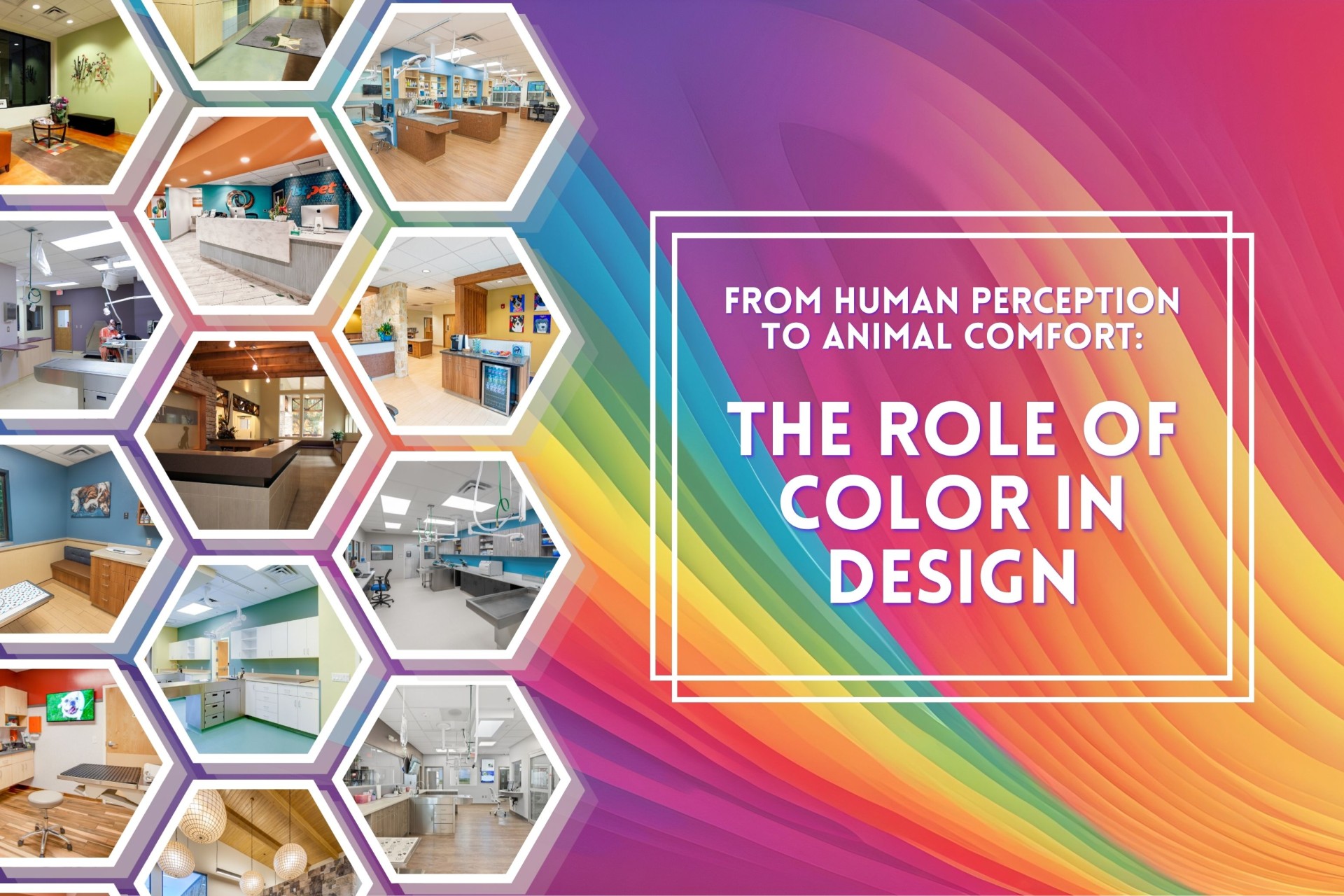
From Human Perception to Animal Comfort: The Role of Color in Design
From human mood influence to species-specific vision, intentional color choices can transform veterinary clinics and animal care facilities into calmer, lower-stress spaces for both animals and staff.
The Human Response to Color
Colors can affect a person's mood by triggering emotional and psychological responses in the brain. These responses are often influenced by personal experiences, cultural meanings, memories, environmental cues, and biological reactions. In interior design, color can influence the mood, perception, and behavior of occupants.
Warm Colors
Warm colors—red, orange, and yellow—are often associated with warmth, energy, excitement, and, depending on the context, anger or hostility.
- Red: Passion, excitement, and love. Red can stimulate the body and mind, increase energy, and create a sense of excitement.
- Yellow: Hope, joy, and danger. Yellow can stimulate the nerves, promote happiness and positivity, and enhance mental clarity. However, very intense yellow can also contribute to feelings of anxiety.
- Orange: Warmth, kindness, and joy. Orange can create an energetic and welcoming atmosphere and is often associated with increased energy and vitality.
Cool Colors
Cool colors—blue, green, and purple—are generally associated with calmness, relaxation, and reflection, although they can also evoke sadness or indifference depending on the context.
- Blue: Wisdom, hope, reason, and peace. Blue is often associated with calmness, trust, and reliability. It can promote positive feelings, although certain shades or contexts may evoke sadness.
- Green: Nature, growth, and freshness. Green can reduce stress and promote feelings of renewal, health, and balance. It can also symbolize envy.
- Purple: Mystery, nobility, and glamour. Purple can inspire creativity and imagination while signaling luxury, sophistication, spirituality, and depth.
Neutral Colors
- White: Truth and, in some contexts, indifference. White creates a sense of cleanliness, simplicity, and openness. It can promote clarity and organization, but excessive use may make a space feel sterile or impersonal.
- Black: Nobility, mystery, and coldness. Black can create a bold, timeless, and sophisticated atmosphere. It represents authority and can add depth and drama to a space. However, too much black can make an environment feel heavy or oppressive.
The effects of color depend greatly on context, personal experience, culture, lighting, and surrounding elements. Bright colors may help increase energy and productivity, while softer tones can create a calmer environment and improve focus.
Animals and the Effects of Color
While human responses to color are strongly connected to personal experiences and cultural meanings, animals perceive color differently from humans. Because of these differences in vision, colors can affect animals in different ways.
Dogs
Dogs have dichromatic vision, meaning they have two types of color-sensitive cone cells compared with the three types found in humans. Dogs can distinguish blues and yellows relatively well, while they have difficulty distinguishing reds and greens. Colors that humans see as red or green may appear to dogs as different shades of brown, gray, yellow, blue, or purple.
Cats
Cats have trichromatic vision, but their color perception differs from humans, particularly at the red end of the spectrum. Cats are better able to distinguish blues, greens, and grays, while reds, pinks, purples, and some yellows can be more difficult for them to distinguish. Cats also perceive fewer variations in shade than humans.
Mindful Design Color Schemes
Because dogs and cats perceive color differently, Mindful Design color schemes can be used to help create environments that are more comfortable and calming for animals. These color choices take animal vision into consideration by emphasizing colors that cats and dogs can recognize more easily.
Using appropriate colors in animal environments can contribute to a calmer atmosphere and may help reduce visual stress. This is particularly important in spaces such as veterinary clinics, shelters, grooming facilities, and other environments where animals may already experience anxiety.
Ultimately, bridging the gap between human and animal design requires looking past our own chromatic worldview. While interior designers naturally rely on color psychology to shape human emotions and set a welcoming tone for pet owners and staff, true animal-centric design requires factoring in how species-specific vision translates those environments. By deliberately selecting soothing, accessible palettes that account for dichromatic and feline-specific perception—rather than relying on sterile whites or disorienting contrasts—we can create spaces that visually harmonize human comfort with animal well-being, transforming high-stress veterinary environments into spaces of genuine care.