
Trending
Building Design for Animals
Article by Becky Gasser - Director of Design
The High-Performance Dental Zone
When addressing dental services, the focus often falls on the "what"—the scalers, the digital X-rays, and the latest in oral health. But for a practice owner, the most critical factor isn't the equipment itself; it's the spatial orchestration of that equipment.
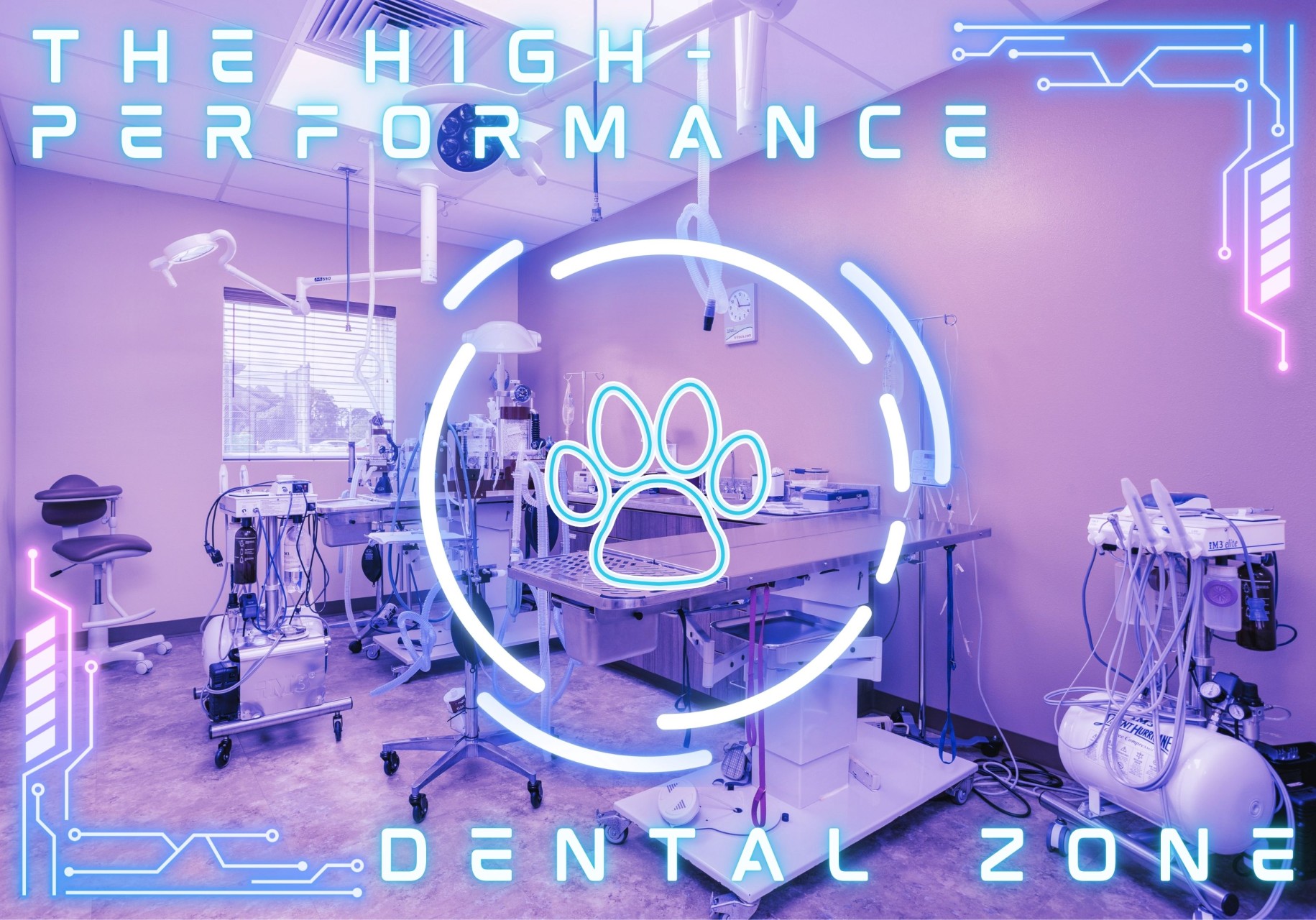
At BDA, we believe that your dental area—whether it is a dedicated multi-table suite or a single, highly efficient station within your treatment room—should be more than just an afterthought. Every square foot of a veterinary hospital is hard-earned real estate. Our goal is to transform that space into a high-performance engine room designed to manage the invisible challenges of veterinary dentistry: aerosolized pathogens, acoustic stress, and workflow friction.
Managing the "Aerosol Plume"
The most significant architectural challenge in dental design is containment. Dental procedures inherently aerosolize bacteria and water, creating a "plume" that can travel further than most teams realize. While guidelines suggest separation from sterile surgery, a truly expert design goes further.
We utilize Atmospheric Zoning. By strategically placing high-volume exhaust systems and designing for specific air-pressure differentials, we create an "invisible barrier." This ensures that odors and pathogens are captured at the source and exhausted out of the building before they can migrate into the main treatment floor or other spaces.
The Geometry of the "Dental Arc"
Efficiency in a dental suite is measured in inches. We often see hospitals where expensive equipment is underutilized because the "sweep" of the room is wrong. An architect specializing in veterinary medicine doesn't just place a table; we design the Dental Arc.
This involves calculating the exact radius of wall-mounted X-ray arms and the swing of anesthesia booms to ensure they cover the patient without obstructing the technician’s mobility throughout the room. When the geometry is correct, the technician can chart, monitor, and scan without ever having to untangle a cord, reposition a heavy machine, and disturb the animal.
Acoustic Dampening: The Silent Productivity Killer
The high-frequency whine of a dental scaler is more than just an annoyance; it is a significant stressor for patients in recovery and a major contributor to staff fatigue.
In our designs, we move beyond simple walls. We look at Acoustic Zoning—using specialized sound-baffling materials and strategic alcove orientation to dampen high-frequency noise. By reducing the "decibel spill" into the rest of the hospital, we create a calmer environment for the entire team and a more Fear-Free© experience for the patients nearby.
The Linear Sterilization Path
Finally, we look at the "Path of the Instrument." A common design flaw is the "Backtrack," where contaminated dental tools are carried across clean zones to reach the autoclave.
A BDA-designed suite prioritizes a Linear Workflow. We map the movement of tools from the dental table to the ultrasonic cleaner and finally to sterilization in a way that never crosses a high-traffic or sterile corridor. This isn't just about efficiency; it's about a higher standard of hospital-wide asepsis.
Conclusion: Don't Just Add a Table; Design a System
The difference between a 'placeholder' dental area and a professional dental workspace is the architectural intent behind it. Whether you are carving out a dedicated alcove or optimizing a single station in a busy treatment room, designing for the invisible—air, sound, and movement—creates a space that sustains your staff and protects your patients.
If you are looking to expand your dental offerings, don't leave your workflow to chance. Let's design a space that works as hard as you do.