
Trending
Building Design for Animals
Article by Becky Gasser - Director of Design
Sensible Sustainability: Beyond the Plaque
In the modern veterinary landscape, "going green" has evolved. It is no longer just an ethical choice or a marketing badge; it is a fundamental strategy for operational survival.
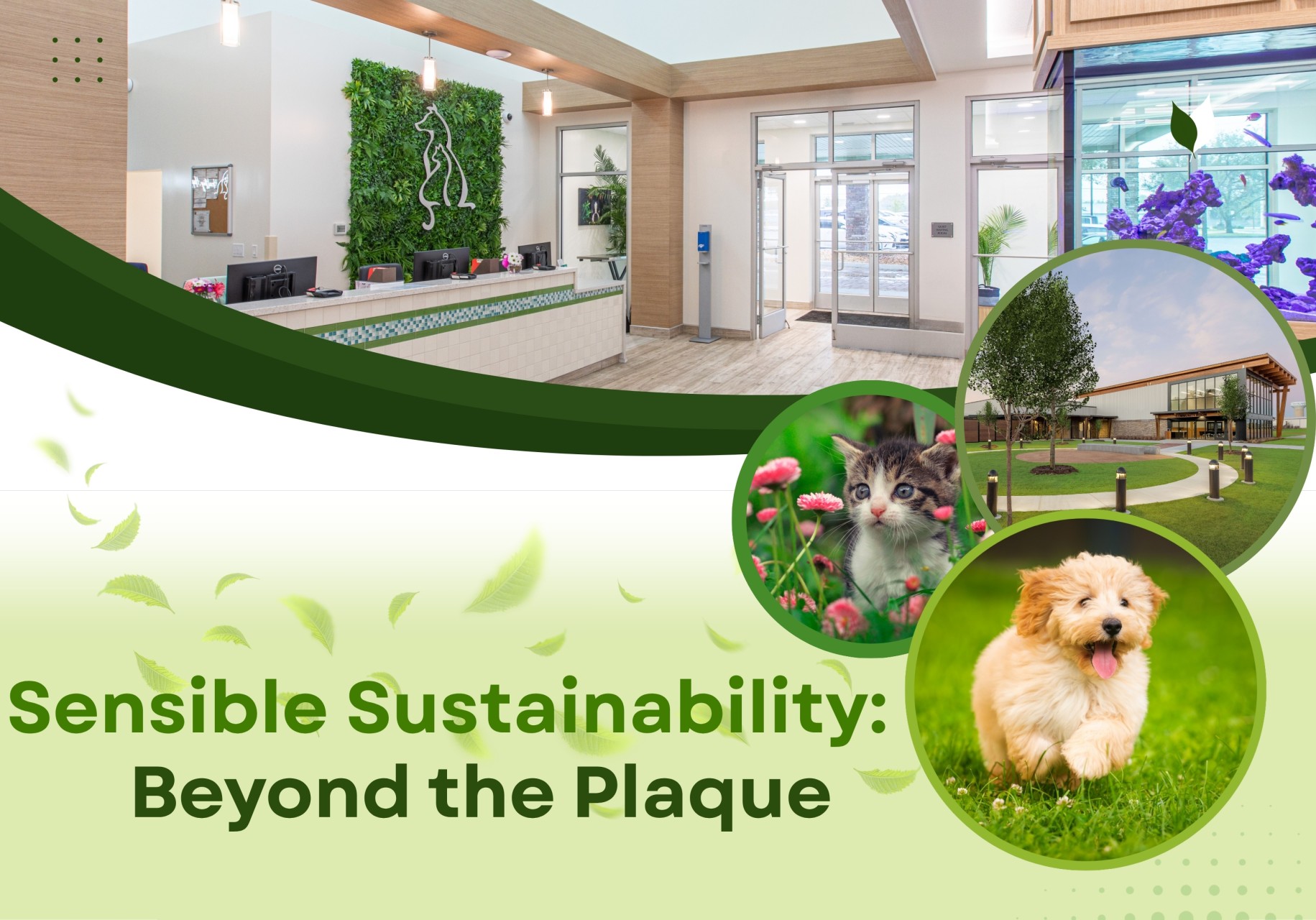
Whether it's the rising cost of utilities or the increasing frequency of extreme weather, the way we design our hospitals today determines how effectively they can function tomorrow.
At BDA, we've always championed a strategy we call "Sensible Sustainability." It's an approach that shifts focus from the expensive "marketing plaques" of third-party certifications and concentrates instead on the clinical and financial health of your hospital.
By designing for long-term function rather than just today's material trends, we create hospitals that remain sustainable and efficient for decades.
The Efficiency of Design
Most people assume sustainability is a "bolt-on" feature like a solar panel, but the most impactful strategies are invisible. While construction materials matter, they only account for roughly 10% of a building’s lifetime footprint. The real challenge—and opportunity—lies in the remaining 90%: the operational energy required to run a 24/7 clinical environment.
By prioritizing the "Building Envelope," we create structures that work with the environment rather than fighting against it. Whether it is through precision siting to manage solar heat or advanced air-sealing techniques, our goal is to lower the "metabolic rate" of your hospital. This isn't just about saving the planet; it’s about making sure your utility bills don't eat your profits.
Medical-Grade Performance
Sustainability in a veterinary setting must be medical-grade. A "green" material that cannot withstand the rigors of hospital-level disinfection or fails to improve the patient experience isn’t suitable for your veterinary practice.
At BDA we look for the intersection of wellness and efficiency. This includes:
- Advanced Lighting Environments: Moving beyond basic illumination to systems that support the natural internal clocks of both your staff and your hospitalized patients.
- Intelligent Atmosphere Control: Veterinary hospitals require high air-exchange rates for safety and odor control. We utilize specialized systems that recover energy while maintaining pristine air quality, ensuring that "fresh air" doesn't come with a staggering price tag.
- Material Longevity: True sustainability is durability. We select high-performance, bio-based finishes that are designed to last for decades, reducing the environmental and financial cost of frequent renovations.
The Shift Toward Resiliency
Sustainability looks back at our impact on the earth; Resiliency looks forward at the earth’s impact on us. We are moving away from the era of "disposable" buildings. Our goal is to create structures that act as a community refuge.
We’ve seen our designs withstand devastating hurricanes, remaining intact and operational when surrounding structures were lost. By focusing on location-dependent robust materials—from wind-rated envelopes in coastal zones to fire-resistant shells in the West—we prioritize building systems and structural choices that allow a facility to remain operational during and after extreme weather events.
The BDA Partnership
Our role as architects is to act as your advocates. We guide our clients toward choices that offer the highest return—not just in terms of energy saved, but in terms of staff retention, patient healing, and long-term asset value.
Sustainability shouldn't be a burden on your budget. When done right, it is the very thing that protects it.