
Trending
Building Design for Animals
Article by Paul Gladysz, AIA, NCARB, CSI
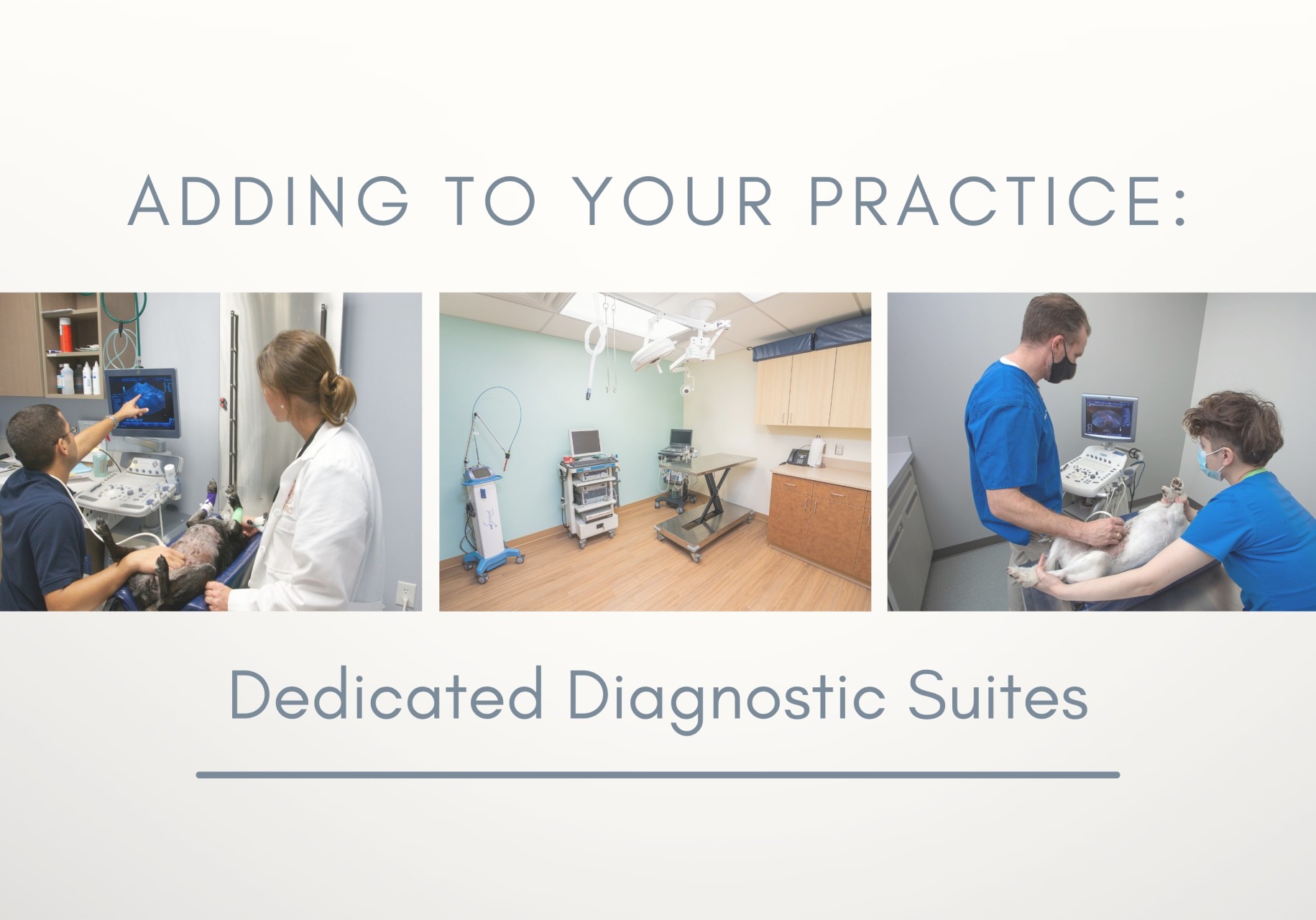
Adding to Your Practice: Dedicated Diagnostic Suites
Adding advanced diagnostic services to a general practice doesn't just elevate the speed and quality of patient diagnosis and care—they can significantly increase the overall value of your facility.
The Evolution of In-House Veterinary Care
The standard of care in veterinary medicine continues to rise, bringing procedures once reserved for specialty hospitals—such as ultrasound and endoscopy—into general practice. While providing these services in-house is convenient for clients and beneficial for patients, it requires a dedicated, intelligent architectural approach.
A functional diagnostic suite cannot be an afterthought. Poorly planned spaces lead to wasted staff time, increased procedure difficulties, and compromised patient care. At BDA, we specialize in designing these complex spaces to ensure your team operates at peak efficiency.
Here is an architectural breakdown of designing dedicated spaces for today's most advanced diagnostic procedures.
Strategic Design for Ultrasound Suites
Ultrasound is a core diagnostic tool, but its room must be designed around the visual needs of the practitioner and the positional comfort of the patient.
Key Design Considerations:
- Size and Layout: A functional space allows for proper circulation and accommodates various practitioner preferences.
- Optimal Viewing Environment: The room must be easily darkened so the scan screen is clearly visible.
- Patient Positioning: A variable-height table is preferred to minimize stress on staff and ensure proper patient positioning.
- Utility Integration: Ultrasound procedures may require sedation. Therefore, the room must be capable of supporting oxygen delivery and anesthesia gas scavenging.
Customizing the Endoscopy Procedure Room
Endoscopy, by its nature, is often a more involved and sometimes messy procedure than ultrasound. The design must accommodate the equipment and the necessary cleanup, while also addressing sanitation and odor control.
Key Design Considerations:
- Room Arrangement and Size: Because the veterinary team consistently works at one end of the patient, a peninsula arrangement is usually the most effective layout. The room size should allow for staff circulation around the central wet table.
- Mess and Cleanup: Unlike ultrasound, endoscopy requires robust sanitation features. We prefer tables that simplify cleanup and a dedicated hand wash sink inside the room for immediate hygiene.
- Scope Storage: Endoscopes should be stored hanging, not coiled, to prevent the fiber bundle from developing a curve memory.
- Odor and Ventilation: Because endoscopy procedures can produce odors, a separate, dedicated exhaust fan is critical.
- Workflow: Like the ultrasound room, the endoscopy suite requires dimmable lighting, and drops for oxygen and anesthesia gas venting are necessary. A data-input workstation and ample countertop space are also key for procedure documentation and staging.
Maximizing Utility with Multipurpose Rooms
Due to rising construction costs and tight space constraints, many hospitals combine these specialty areas. The most effective multipurpose room design begins by combining the worst-case requirements (size, utility, and sanitation) of all intended procedures into one efficient space.
To avoid critical bottlenecks, BDA architects often propose solutions that maximize flexibility:
- Dual-Table Spaces: Building one large room that can be quickly divided using soft separation methods, such as light-blocking curtains on ceiling tracks.
- Portable Equipment Utilization: Using portable ultrasound units allows the procedure to be performed in other rooms that can be darkened.
- Off-loading Support Tasks: Free up the expensive specialty space by dedicating areas elsewhere for non-core activities.
Your Next Step in Facility Planning
Designing these specialized spaces requires deep knowledge of both veterinary medicine and architectural best practices. Understanding how to integrate these complex utility, environmental, and workflow requirements into a cohesive, cost-effective design is our core expertise at BDA.
We invite you to reach out to our team to discuss how we can translate these principles into a custom solution for your new build or renovation project.
For a more in-depth, technical exploration of these concepts, please see the original article published in Today’s Veterinary Business: Inside Information.