
Trending
Building Design for Animals
Article by Becky Gasser - Director of Design
Beyond the Building: Veterinary Parking for Pets & Clients
The parking lot is easy to overlook, but from the moment someone pulls in from the drive it is making an impression, and you want it to be a positive one.
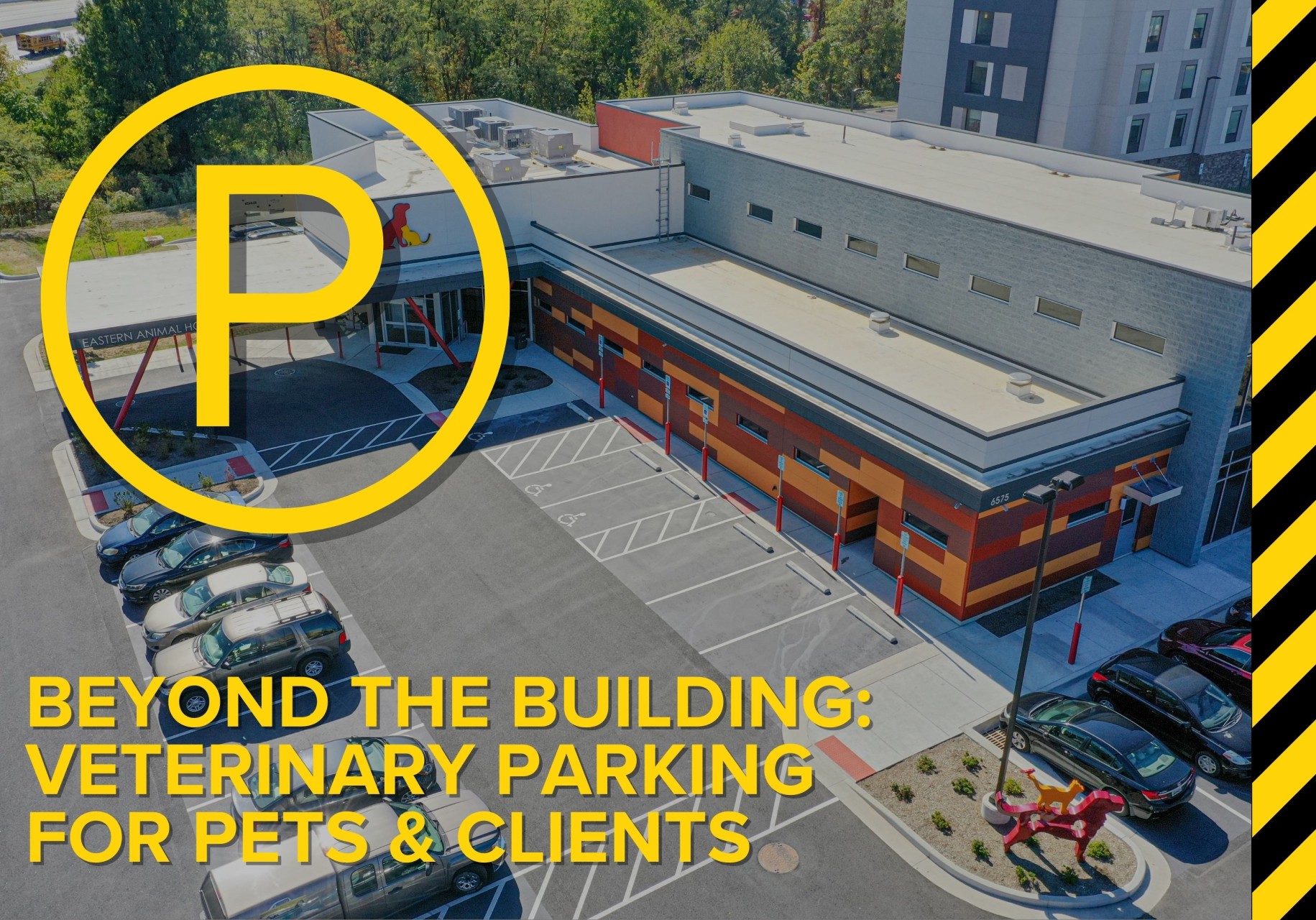
When designing a veterinary hospital, the structure itself often takes center stage. While treatment designs and surgery room layouts are critical, the parking lot is the very first impression your hospital makes on a client. Its appearance and functionality are the first things people see and perceive upon arrival. Proper planning and design of your parking area can significantly enhance the client experience, improve staff efficiency, and boost your facility's operations.
The following factors are essential to ensure your parking areas are well designed and functional for both clients and staff.
Determining the Right Number of Parking Spaces
Local zoning regulations provide the minimum number of parking spaces required based on square footage and business type, but these seldom reflect the actual needs of a high-volume veterinary hospital.
As you plan, think about client parking and staff parking separately.
- Client Parking: Consider your average client volume, peak hours, and whether the hospital offers urgent care or emergency services.
- Staff Parking: Account for the maximum number of staff on shift at one time, including shift overlaps, and plan for future growth.
If parking demand exceeds the available space there are solutions to be found in design.
Prioritizing Emergency Access
In emergency veterinary hospital design, quick and efficient animal admission is crucial. Emergency parking should be located as close as possible to the entrance, allowing clients to quickly unload and admit their pets to the medical team.
Options for emergency access include a pull-over area with an adjacent passing lane, or simply a designated, clearly signed spot near the entrance. Some hospitals incorporate a porte cochère—a covered pull-through area—to provide protection from inclement weather and highlight the emergency entrance. Designated, visible emergency parking ensures staff can quickly respond if a client needs help unloading large or distressed animals.
Separation for Security and Convenience
When possible, separating client and staff parking is highly beneficial. This ensures clients, who are often managing pets, don't have to walk long distances.
If your hospital uses distinct entrances, you should position the respective parking areas nearby to alleviate traffic congestion and maximize convenience. A significant benefit of separate staff parking, especially at 24-hour facilities, is the ability to fence it off or securely enclose it from public access. This small consideration can go a long way in recruiting and retaining staff who prioritize vehicle security, particularly when working overnight shifts.
Planning for Comfort and the Future
As veterinary hospitals continue to evolve, features like covered parking and EV charging stations are increasingly desired.
- Covered Parking: This offers protection from the elements, which is especially important for clients getting pets in and out of the vehicle during harsh weather.
- EV Charging: With the growing adoption of electric vehicles, incorporating EV charging stations is becoming essential for future-proofing your facility and appealing to a broader client base.
Leveraging Parking Lot Waiting
The pandemic popularized the concept of parking lot waiting, where clients wait in designated spots until their pet's exam time. This gives clients the option of a private, comfortable, and familiar environment rather than a traditional waiting room, which can cause stress and anxiety for pets due to unfamiliar smells, sounds, and other animals.
If your hospital offers this option, designate specific, clearly signed parking spaces close to the entrance and provide clients with clear check-in instructions. Similar to your indoor waiting area, consider the exterior aesthetics, positioning waiting spots near landscaping features like gardens or murals to create a more pleasant environment.
The Aesthetic Role of Landscaping
The parking lot plays a critical role in shaping the first impression. Thoughtful landscaping can transform a mundane concrete expanse into a warm, inviting space that reflects the care and attention your practice gives to both pets and people.
- Trees: the most effective way to improve the look, providing shade, visual interest, and seasonal changes.
- Flowers: add color and vibrancy.
- Designated dog relief area: Integrating a potty area near the parking lot greatly enhances the client experience and helps prevent unwanted marking behavior on other landscaped areas.
The Hidden Design Challenge
We've covered the what and why, but the real difficulty lies in the how. Determining the precise number of spaces, the optimal flow for emergency vehicles, and the most cost-effective location for EV infrastructure requires a detailed space utilization analysis and site-specific regulatory knowledge. These calculations directly impact your budget, building size, and overall operations.
The parking lot is not an afterthought—it's a sophisticated engineering puzzle that must be solved before the first shovel hits the ground. The BDA team specializes in solving these hidden complexities to ensure your facility starts on a foundation of operational excellence.
Ready to Move Beyond the Basics?
Thoughtful parking design is a critical component of a successful veterinary hospital. The right design improves functionality and ensures a welcoming, efficient environment. If you are ready to start a design project and need specialized expertise to turn these considerations into code-compliant, high-performance solutions, we are here to help.
For a deeper dive into the specific metrics and design calculations that dictate parking lot efficiency, read the original article that inspired this post: Parking considerations for optimal client and staff experience.